
Supply TP304L stainless steel pipes & tubes in seamless and welded forms. Custom OD, wall thickness, and length available. Competitive pricing, strict quality control, and global export support for industrial projects.
TP304L (also known as UNS S30403, EN 1.4307, or 00Cr18Ni10) is an austenitic stainless steel alloy with a maximum carbon content of only 0.03%—just half that of standard TP304. This intentionally low-carbon design brings a significant advantage: it almost completely eliminates the risk of "sensitization" during the welding process.
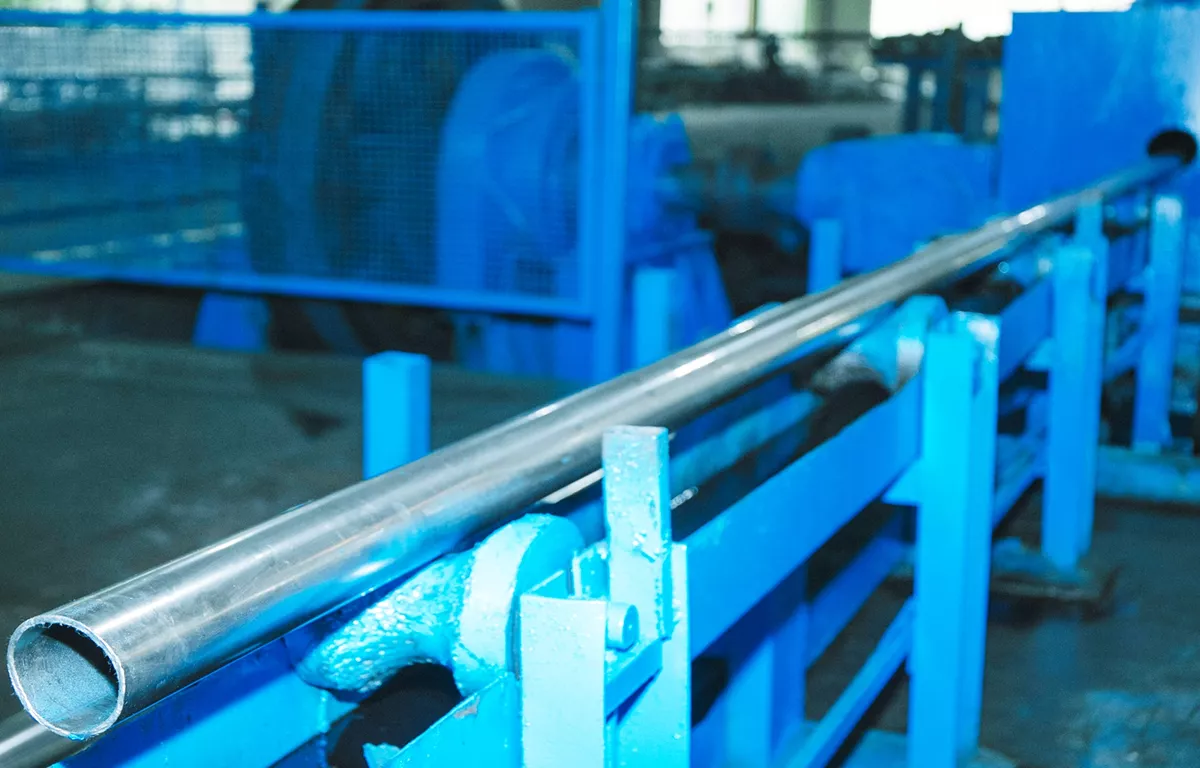
TP304L is primarily used in industrial systems that require high corrosion resistance, excellent weldability, and good formability. It is manufactured in accordance with international standards such as ASTM A312 / ASME SA312 and ASTM A213 / ASME SA213, and is widely applied in boilers, heat exchangers, chemical equipment, and general piping systems.
| Item | Description |
| Standard Specifications | ASTM A312 / ASME SA312, ASTM A213 / ASME SA213 and other international standards |
| Material Grade | TP304L (low-carbon 304 type) |
| Manufacturing Type | Seamless pipes; welded pipes and ERW (electric resistance welded) pipes available upon request |
| Outer Diameter (OD) | 6.0 mm – 426 mm |
| Wall Thickness (WT) | 0.5 mm – 13 mm |
| Length | Customizable (according to customer requirements) |
| Surface Finish | Pickled, Annealed (solution treated), Polished |
| Element | Content (%) | Purpose |
| Chromium | 18.0–20.0 | Forms passive oxide layer for corrosion resistance |
| Nickel | 8.0–12.0 | Stabilizes austenitic structure for ductility |
| Carbon | ≤0.03 | Prevents sensitization and intergranular corrosion |
| Manganese | ≤2.0 | Strengthens alloy without reducing ductility |
| Silicon | ≤0.75 | Improves oxidation resistance |
| Phosphorus | ≤0.045 | Controlled impurity level |
| Sulfur | ≤0.03 | Controlled impurity level |
| Item | Parameter |
| Tensile Strength (抗拉强度) | ≥ 515 MPa (75,000 psi) |
| Yield Strength (屈服强度) | ≥ 205 MPa (30,000 psi) |
| Elongation (延伸率) | ≥ 40% (significantly higher than ordinary carbon steel) |
| Density (密度) | 7.93 g/cm³ |
| Melting Range (熔点范围) | 1398–1454°C (2548–2649°F) |
| Hardness (硬度) | ≤ 201 HB (Brinell) |
Excellent Corrosion Resistance
TP304L contains relatively high levels of chromium (Cr) and nickel (Ni), enabling it to maintain excellent oxidation and corrosion resistance in a wide range of corrosive environments, making it suitable for most industrial fluid media.
Good Weldability and Processability
The low carbon content reduces the risk of intergranular corrosion, preventing sensitization after welding, and making TP304L suitable for manufacturing complex welded structures.
Good High-Temperature and Low-Temperature Performance
It maintains stable mechanical properties under high-temperature conditions, while also exhibiting excellent toughness and ductility in low-temperature environments.
Chemical and petrochemical equipment: used for transporting corrosive media and high-temperature steam.
Unmatched Corrosion Resistance
The chromium-nickel matrix of TP304L forms a passivation oxide layer with "self-healing" capability, effectively resisting:
Outstanding Weldability
Highly Cost-Effective Overall Performance
Although the procurement cost of TP304L is approximately 15% higher than carbon steel, its service life of over 30 years (compared to only 5–10 years for carbon steel in corrosive environments) provides a significant 3:1 advantage in lifecycle cost.
Wide and Flexible Temperature Range
With this wide temperature applicability, TP304L is an ideal choice for a variety of applications—whether in liquefied natural gas (LNG) processing facilities or high-temperature sterilization systems in food processing plants, it performs reliably and efficiently.
When selecting TP304L stainless steel pipes, decisions should be made based on the specific operating environment:
Design Pressure and Temperature Range
Specification Selection Checklist
Surface finish:
Installation Best Practices
Common Mistakes to Avoid
Q: How does TP304L compare to TP304?
A: The key difference is carbon content (0.03% vs 0.08%). TP304L eliminates sensitization during welding, making it ideal for applications where post-weld heat treatment isn’t feasible.
Q: When should I choose TP304L over TP316L?
A: TP304L is more cost-effective and sufficient for most non-chloride environments. Use 316L when chloride concentrations exceed 200 ppm or in marine/submerged applications.
Q: What pressure ratings can TP304L handle?
A: Seamless TP304L pipes can handle up to 10,000 psi at ambient temperature (varies with size and wall thickness). Always calculate using ASME B31 codes.
Q: Does TP304L require post-weld heat treatment?
A: No—its low carbon content prevents sensitization, so PWHT is generally unnecessary for most applications.
Q: What is the maximum operating temperature for TP304L?
A: 925°C (1700°F) for continuous service, 870°C (1600°F) for intermittent service.
Need a Quote or Technical Support?
Contact us for fast quotation and expert guidance.
Get a Quote