
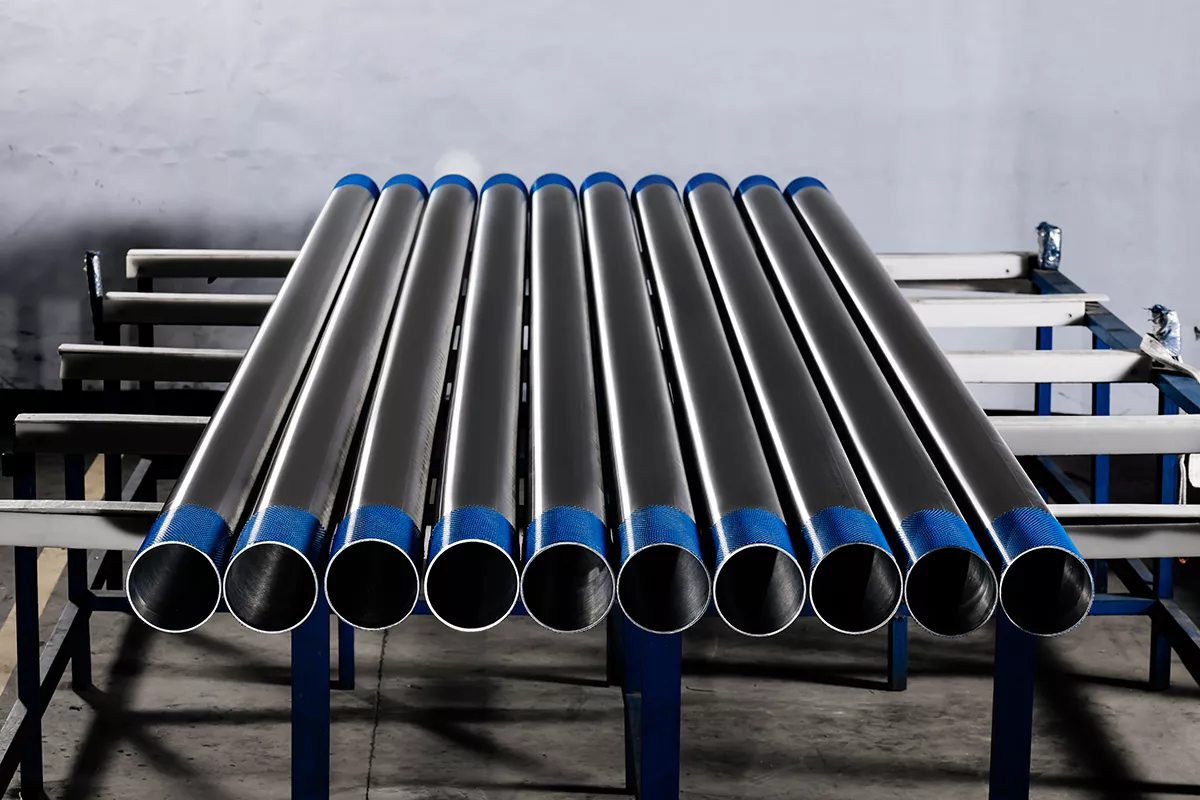
ASTM A213 / ASME SA213 TP304L is a low-carbon seamless stainless steel tube with excellent corrosion resistance and weldability for harsh environments.
Manufacturing Process
TP304L stainless steel seamless tube is a low-carbon austenitic stainless steel material (UNS S30403), specifically designed for high-temperature and corrosive service conditions, and is widely used in power generation, petrochemical, and heat exchange equipment industries.
This product is manufactured in strict accordance with ASTM A213 / ASME SA213 standards, offering stable performance, excellent corrosion resistance, and long service life, making it a reliable choice for industrial piping systems.
TP304L is a low-carbon version of 304 stainless steel. Compared with TP304:
Therefore, TP304L is more suitable for welded structures and corrosion-sensitive environments.
ASTM A213 / ASME SA213 TP304L stainless steel seamless tubes, with their low carbon composition, excellent corrosion resistance, and good weldability, provide a cost-effective solution for high-temperature and corrosive environments, especially suitable for industrial systems that require high reliability and long-term stability.
| Standard | ASTM A213 / ASME SA213 |
| Material Grade | TP304L (UNS S30403), 304L |
| Type | Seamless Tubes (Primary), Welded Tubes Available |
| Outer Diameter | 6mm – 426mm |
| Wall Thickness | 0.5mm – 13mm |
| Length | Random / Fixed Length / Custom |
| Element | TP304L Requirement |
| Carbon (C) | ≤ 0.030 |
| Manganese (Mn) | ≤ 2.00 |
| Phosphorus (P) | ≤ 0.045 |
| Sulfur (S) | ≤ 0.030 |
| Silicon (Si) | ≤ 1.00 |
| Chromium (Cr) | 18.0 – 20.0 |
| Nickel (Ni) | 8.0 – 12.0 |
| Tensile Strength | ≥ 485 MPa |
| Yield Strength (0.2%) | ≥ 170 MPa |
| Elongation | ≥ 35% |
| Outside Diameter (OD) | OD Tolerance | Wall Thickness (WT) Tolerance |
| ≤ 38.1 mm (1.5") | ±0.15 mm | ±10% of nominal |
| >38.1–50.8 mm (1.5–2") | ±0.20 mm | ±10% of nominal |
| >50.8–63.5 mm (2–2.5") | ±0.25 mm | ±10% of nominal |
| >63.5 mm (2.5") | ±0.30 mm | ±10% of nominal |
Low Carbon Design (≤0.03%)
TP304L adopts ultra-low carbon content, effectively reducing carbide precipitation during welding and significantly lowering the risk of post-weld intergranular corrosion. It is especially suitable for applications where post-weld heat treatment cannot be performed.
Excellent Corrosion Resistance
It offers outstanding oxidation resistance and chemical corrosion resistance, enabling long-term stable operation in acidic, humid, and marine environments. It is widely used in chemical processing and corrosive media systems.
Excellent Weldability
The material has excellent weldability and strong processing adaptability, making it an ideal choice for welded piping systems and structural components, while ensuring long-term reliability of welded areas.
Stable High-Temperature Performance
It maintains good strength and structural stability under high-temperature conditions, making it suitable for boilers, heat exchangers, and heat treatment equipment.
High-Precision Manufacturing Process
Produced using cold drawing or cold rolling seamless processes with strict dimensional tolerance control, ensuring consistency and reliability in high-pressure and precision equipment.
Long Service Life and Cost Efficiency
With excellent corrosion resistance and stable performance, it effectively reduces maintenance frequency and replacement costs, providing higher long-term value for users.
ASTM A213 TP304L seamless stainless steel tubes, with their corrosion resistance, high-temperature resistance, weldability, and high reliability, have become a key material choice in industries such as heat exchangers, boiler systems, petrochemical engineering, power generation, and food and pharmaceutical industries. They can meet the long-term stable operation requirements under various severe working conditions.
Heat Exchangers and Thermal Exchange Systems
Suitable for various heat exchange equipment and components, including:
Boiler and High-Temperature Systems
Widely used in critical components under high-temperature and high-pressure conditions:
Petrochemical and Refining Industry
Used in piping and equipment systems under complex process conditions:
Power and Energy Industry
Suitable for various power generation facilities and energy systems:
Food and Beverage Industry
Meets hygienic and clean requirements:
Pharmaceutical Industry
Used in high-cleanliness and sterile environments:
High-Pressure and Corrosive Media Piping Systems
Suitable for industrial conveying applications with high requirements for corrosion resistance and pressure, including various corrosive media pipelines.
TP304L seamless stainless steel tubes are produced under a strict quality management system to ensure that product performance, dimensions, and reliability meet international standards and high-end industrial application requirements.
Production Process
The typical manufacturing process of TP304L tubes is as follows:
Quality Inspection and Control System
Multi-stage quality control is implemented throughout the production process to ensure each pipe meets the required standards:
Documentation and Certification Support
Each batch of ASTM A213 TP304L seamless tubes can be supplied with complete quality documentation, including:
In addition, the production system is certified with the following international standards:
Ensuring compliance with European and global pressure equipment regulations.
To ensure that the pipes you order are delivered intact without damage, we adopt industry-leading protective packaging solutions:
Delivery time:
Transportation services: Air, sea, and railway transportation services are available, covering major global destinations, with real-time cargo tracking throughout the entire process
When selecting materials for welded structures or elevated temperature service, the choice between TP304 and TP304L directly impacts long-term reliability.
| Feature | TP304 | TP304L |
| Carbon Content | ≤ 0.08% | ≤ 0.03% |
| Carbide Precipitation | Moderate risk during welding | Minimal risk |
| Post-Weld Annealing | Often required | Not required |
| Corrosion Resistance | Good | Superior after welding |
| Cost | Slightly lower | Value-added for critical applications |
Recommendation: For applications involving welding, thick sections, or exposure to sensitizing temperatures (425–870°C), TP304L eliminates the risk of intergranular corrosion, reducing inspection costs and extending service life.
Step 1: Determine Application Requirements
Step 2: Select the Correct Size Specifications
Step 3: Verify Material Certification
Step 4: Select Surface Finishing Process
Q1: What is the difference between ASTM A213 and A312?
A: ASTM A213 specifically covers seamless ferritic and austenitic steel tubes intended for boilers, superheaters, heat exchangers, and condensers. ASTM A312 covers both seamless and welded pipes for general corrosion-resistant service. For high-temperature heat exchanger applications, A213 is the required specification.
Q2: Can TP304L be used for marine or coastal environments?
A: While TP304L offers good general corrosion resistance, it is susceptible to pitting and crevice corrosion in chloride-rich marine environments. For direct seawater or high-chloride applications, we recommend TP316L (ASTM A213 Grade 316L) , which contains molybdenum for enhanced resistance.
Q3: Are these tubes suitable for hydrogen service?
A: Yes, TP304L is widely used in hydrogen service due to its stable austenitic structure and resistance to hydrogen embrittlement. However, compliance with specific codes such as NACE MR0175/ISO 15156 should be confirmed based on service conditions.
Q4: Can TP304L be used in high-temperature applications?
A: Yes, TP304L can operate up to 870°C (1600°F) in continuous service, with reduced mechanical properties at elevated temperatures .
Q5: Do you provide U-bend tubes?
A: Yes. We manufacture U-bend tubes for heat exchangers with controlled bend radii, heat treatment after bending (when required), and 100% NDE testing. Please provide your tube sheet drawing for a custom quote.
Q6: What is the maximum operating temperature for TP304L?
A: For continuous service, TP304L can operate up to 870°C (1600°F) under oxidizing conditions. For high-pressure service, temperature limits should follow ASME Boiler and Pressure Vessel Code, Section I or VIII, based on allowable stress values.
Q7: What's the maximum operating pressure for TP304L tubes?
A: Depends on tube dimensions, temperature, and schedule. Calculate using ASME B31.3 or ASME BPVC Section II formulas .
Q8: How to prevent corrosion in TP304L systems?
A:
Explore our full range of stainless steel grades for pipes and tubes, including TP304, TP316, TP321, duplex, and super duplex materials.
Need a Quote or Technical Support?
Contact us for fast quotation and expert guidance.
Get a Quote